
Strategy and intelligence
for brands operating inside
regulated wellness markets.
Growth strategy, positioning, regulatory intelligence, and market analysis, written from our experience operating inside this market since 2017.
Understand regulated wellness
Before copying generic marketing advice.
Strategic insights on growth, positioning, compliance, retention, and market behavior inside regulated wellness markets.
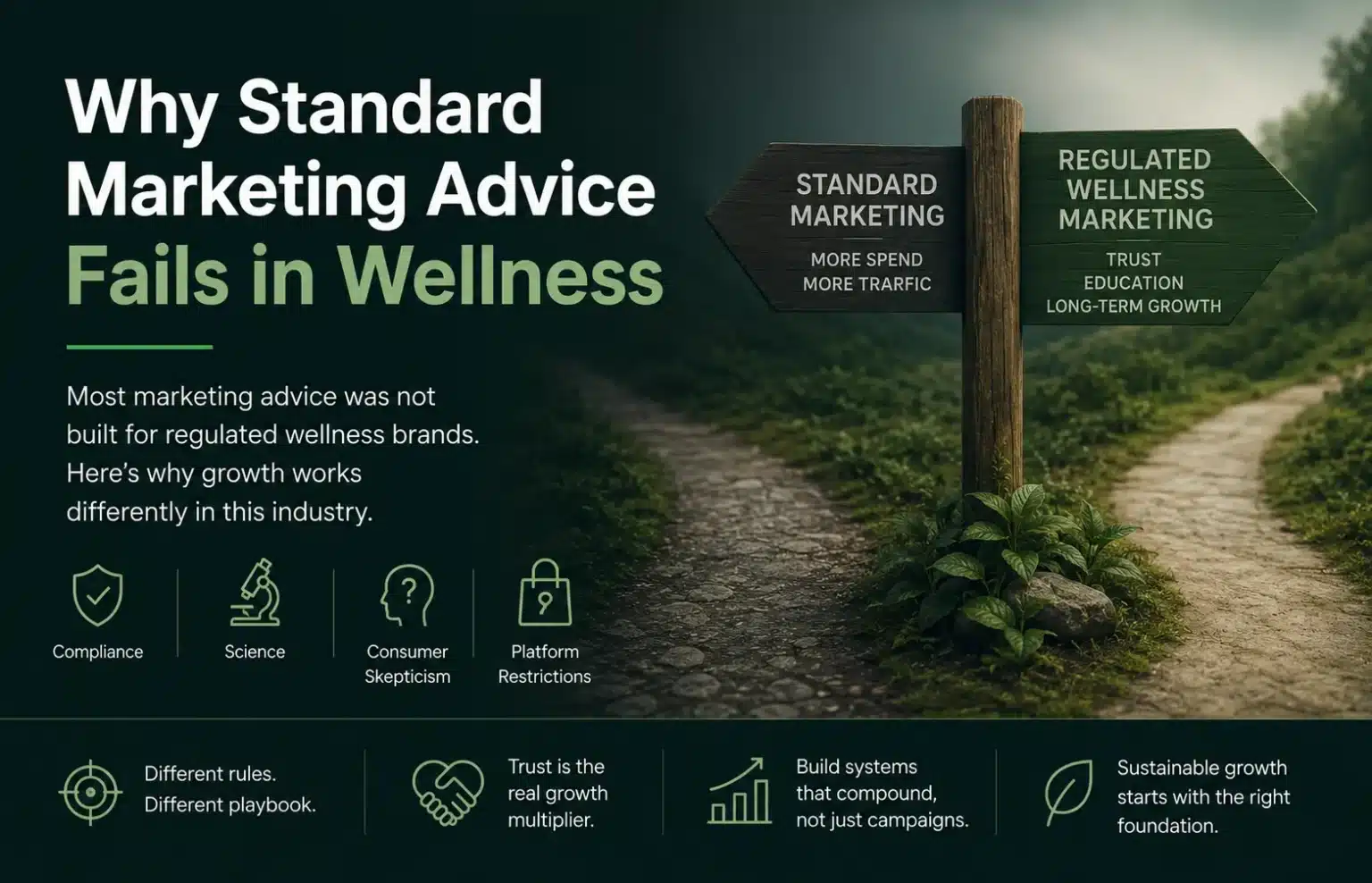
The percentage of first-time buyers who never purchase again is almost never a product problem.

Most brands define themselves by their product. Their buyers define themselves by their problem.
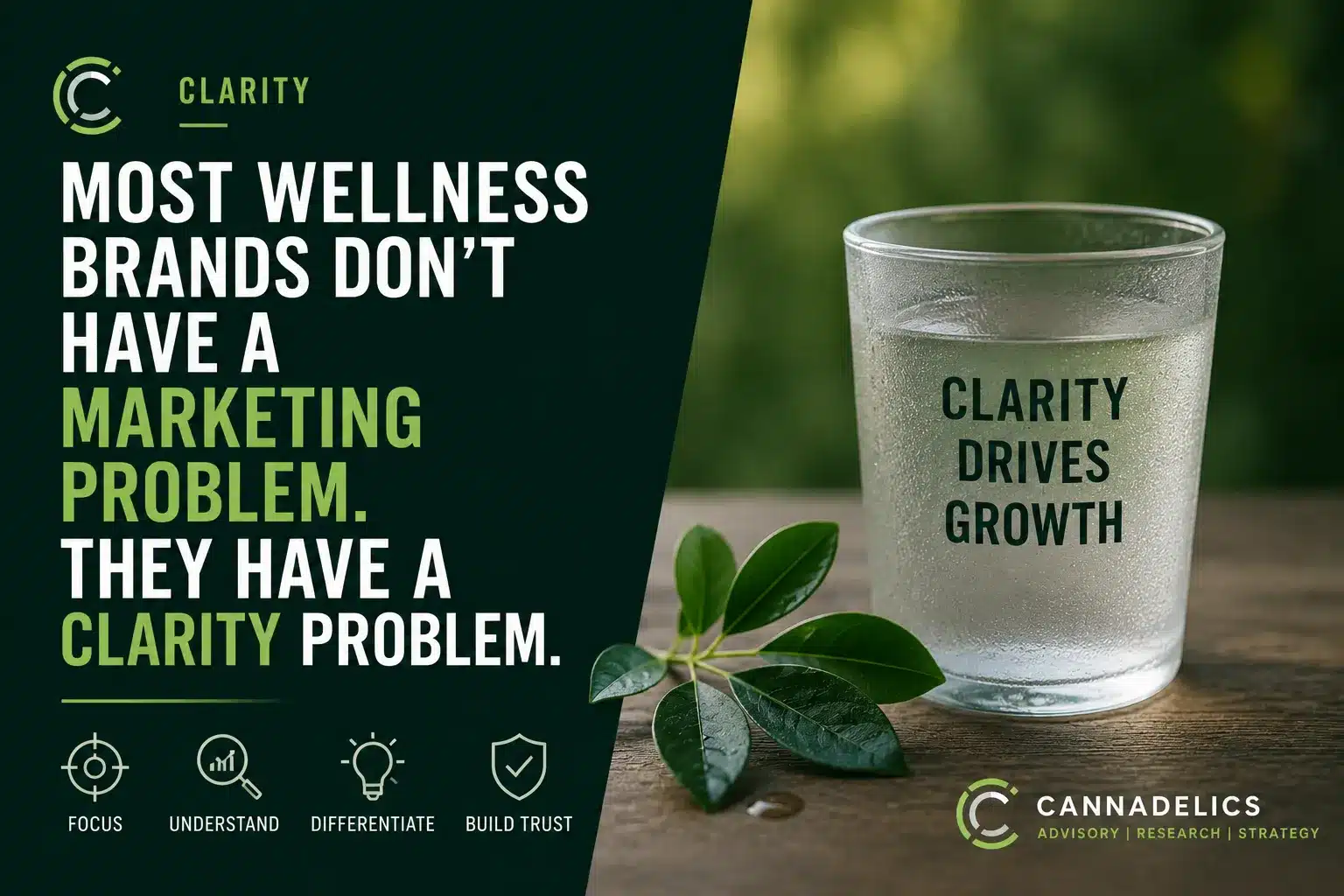
Strong wellness brand positioning fixes what ad spend can’t. Why most wellness brands struggling to grow have a clarity problem, not a budget problem.

Can mushroom brands scale in a growing functional mushroom market? Here’s why most struggle, where the bottlenecks are, and what brands must fix to grow.

Most brands treat compliance as a burden. The ones that scale treat it as a moat.

Learn how wellness marketing compliance helps brands grow through trust, education, positioning, and honest communication without using risky medical claims.
Reading about a marketing problem is one thing. Seeing whether it appears on your own homepage is more useful. Homepage IQ shows you where your positioning, clarity, trust and messaging are working — and where they may be getting in the way.
What’s Your Homepage IQ?Better growth starts with
better decisions.
Positioning, retention, customer acquisition, conversion, messaging, and the strategic decisions that determine whether wellness brands can scale.

The percentage of first-time buyers who never purchase again is usually worse than founders expect, and almost never a product problem.
Most wellness brands define themselves by their product. Their buyers define themselves by their problem. That gap is where growth breaks.
Most wellness brands struggling to grow do not have a traffic problem. They have a clarity problem that more advertising simply amplifies.
Regulation changes the market.
And the marketing.
FDA, FTC, state, federal, and international developments — interpreted through what they mean for brands, positioning, claims, products, and growth.

A warning letter does not mean your brand is finished. It means you have a compliance problem that needs to be understood and fixed quickly.
Most brands treat compliance as a constraint. Stronger brands learn how to use restraint, evidence, and trust as part of their positioning.
Growth does not require exaggerated promises. Trust, education, positioning, and careful communication can do more durable work.
Homepage IQ evaluates the page where your positioning, trust, differentiation and calls to action come together. See your score and identify the changes worth prioritizing before you spend more on traffic.
Get My Homepage IQ ScoreFollow what is changing
before it becomes obvious.
Category shifts, emerging opportunities, consumer behavior, market structure, and the strategic implications behind what is happening across wellness.
The functional mushroom market is growing, but growth in the category does not guarantee that individual brands can scale with it.
What works for an ordinary consumer brand often breaks when advertising rules, health claims, skeptical buyers, and regulation enter the picture.
As acquisition gets more expensive, the economics of keeping customers matter more — and weak retention exposes deeper positioning problems.
Products matter.
How brands explain them matters more.
Analysis of products, formats, brands, positioning, claims, differentiation, and how companies compete inside increasingly crowded wellness categories.
Ingredients and formats are easy for competitors to copy. The strategic advantage usually has to come from somewhere else.
A growing category can hide weak differentiation for a while. Eventually, the brands without a clear reason to exist get exposed.
When medical claims are off limits, strong brands compete through clarity, relevance, evidence, education, and trust.
Strategy becomes useful
when you can see it applied.
Examples of the positioning, messaging, compliance, and growth problems wellness brands encounter — and the decisions that can change the outcome.
A common growth mistake is trying to solve unclear positioning with more acquisition. The extra traffic often just exposes the problem faster.
Removing risky language does not have to make a brand generic. Done well, compliance can force sharper and more credible communication.
Retention problems often begin before checkout. Weak expectations, unclear differentiation, and shallow education can all reduce the chance of a second order.
The wellness market keeps expanding.
Consumer skepticism is expanding with it.
The broader forces shaping wellness brands — consumer trust, health behavior, category convergence, education, product expectations, and the changing relationship between people and the products they use.
Consumers have heard almost every wellness promise before. Brands increasingly have to earn attention through relevance, credibility, and a clearer reason to believe.
Health-adjacent products ask consumers to believe claims they often cannot verify themselves. That makes education, restraint, and credibility central to the buying decision.
Expectations created before the first order shape satisfaction afterward. Retention depends partly on whether the brand communicated the right promise in the first place.
You don’t need to guess where to begin. Homepage IQ gives you a complete assessment of your homepage, including your score, rating, strengths, weaknesses and the improvements worth looking at first.
See My Homepage IQOne useful briefing.
Every Sunday.
The most important market signals, regulatory developments, positioning ideas and strategic observations we found during the week — written for founders and operators building wellness brands.
Read The Sunday Edition