
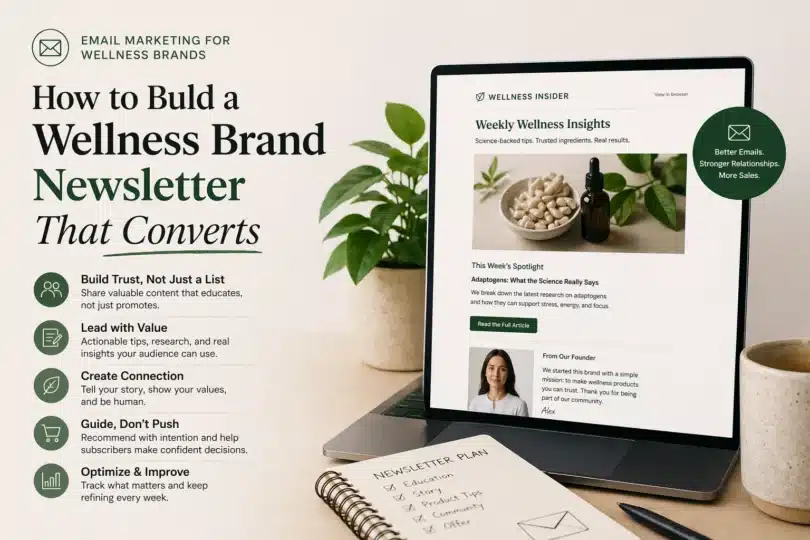

As a brand, building your wellness newsletter is one of the few marketing channels that actually works in regulated markets. No ad account bans. No algorithm changes. No platform-level restrictions on your category. Just a direct line to people who have already told you they want to hear from you.
That doesn’t mean compliance disappears – your messaging still needs to stay within FTC and FDA guidelines, same as everywhere else. But if you have your own wellness newsletter, you control the channel. Nobody can shut it down or restrict your reach overnight. In regulated wellness, that kind of stability is worth more than most brands realize.
That’s a rare thing in this space. And most brands waste it completely.
Based on our own experience with The Sunday Edition, Cannadelics’ weekly wellness newsletter, this channel proved to be priceless, as it built loyalty and allowed us to communicate directly with our audience without relying on any platform we don’t control. And we achieved that without paid advertising, without a viral moment, and without any of the shortcuts most growth guides recommend. What we learned is that building a wellness brand newsletter that converts isn’t complicated. But it requires making a set of decisions that most brands get wrong from the start.
The First Decision: Who Is This Actually For?
Most brands fail with their wellness newsletter even before the first issue is sent because they never answered one question clearly: who is the newsletter for?
Generally speaking, your newsletter can either serve your customers as a retention tool, or serve your industry as a credibility tool. The distinction matters more than most brands realize.
For a brand, you should never forget the simple rule that a wellness newsletter is a retention tool. It’s about keeping buyers engaged, building habit, deepening trust, and generating repeat purchase. The content is about getting the most from your products, understanding why they work, and staying connected to your brand’s world.
A newsletter for your industry is a credibility tool. It’s about establishing authority with partners, press, investors, and potential clients. The content is about market intelligence, regulatory shifts, and strategic insight, exactly what we are doing in the Sunday Edition. We don’t write for consumers. We focus on industry operators and founders, offering them intelligence to improve their brand performance.
These are completely different products. They have different audiences, different content strategies, different conversion goals, and different metrics for success. Brands that try to serve both audiences in one newsletter often fail in building a successful channel.
Before you write a single subject line, answer this: who is the primary reader, and what do you want them to do after reading each issue?
Everything else follows from that answer.
Why Your Wellness Newsletter Won’t Convert
Most brands believe that since ‘the money is in the list’ they should focus on subscribing people to their newsletter. True, building a list is powerful, but it is not your end-goal which is building a wellness newsletter that works for you. We’ve seen brands with a huge list of subscribers focusing on sales and generating almost nothing else from their email channel. While sales are important, don’t ever limit your own channel, as a wellness newsletter is an amazing tool, if only done right.
While every newsletter is unique, most brands suffer from one of the following wrong habits:
They’re broadcasting, not communicating. Every issue of their wellness newsletter is a promotion. Buy this. Try that. Limited time offer. The subscriber signed up expecting value and is getting a sales channel instead. Open rates drop, unsubscribes climb, and the brand concludes that “email doesn’t work for us.”
Email works. Promotional broadcast email doesn’t, at least not as a primary strategy, especially in regulated wellness, where your buyer is already skeptical and already over-marketed to. This rule applies to other industries too.
They’re inconsistent. They send when they have something to sell and go quiet when they don’t. The subscriber forgets who you are as they never established a true relationship with them. When the next email arrives, they don’t recognize the sender name and hit unsubscribe or mark it as spam.
Consistency is the single most underrated factor in newsletter performance. A mediocre newsletter that arrives every Tuesday is worth more than an excellent newsletter that arrives whenever someone remembers to write it. This brings us to another point, which is planning in advance. If you plan to have a weekly newsletter, make sure you can deliver and no, a weekly promotion is not enough, unless that’s specifically what your subscribers signed up for.
They have nothing specific to say. The content is generic, industry news that could have come from anywhere, product updates the subscriber doesn’t care about, wellness tips that have been written a thousand times. There’s no point of view, no specific insight, no reason to open the next one.
They’re outsourcing their voice. AI tools make content easier to produce. That’s real, and there’s nothing wrong with using them. But a wellness newsletter that’s fully automated isn’t a newsletter, but a useless content machine. And your subscribers can feel the difference.
True, AI can help you draft, structure, and edit. But it cannot replace your judgment, your perspective, or your specific knowledge of your market. The moment you stop personally approving every word in your newsletter, you stop owning your most important asset. Not your inventory. Your community.
Always remember, that in regulated wellness, your buyers are sophisticated and skeptical. They’re not reading your newsletter for information they can get anywhere. It is YOU they want to read.
What an Effective Wellness Newsletter Looks Like
Each brand is different so their own voice is unique. However, for your wellness newsletter to be an effective one, It should have the following qualities:
It has a clear, specific audience. Like what we discussed earlier, you must write for clear personas. This persona can’t be a general ‘wellness enthusiasts’, and not ‘my client’, but someone you can imagine and describe in details. True, your actual audience is way bigger, but for establishing a good relationship, you should always focus on someone first.
The more precisely you can describe this person, the more precisely you can write for them, and the more they’ll feel that the newsletter was written specifically for them, which is the feeling that drives opens, clicks, and loyalty.
When we first started Cannadelics, back in 2017 (when it used to be called CBD Testers, as it was focused on the Cannabis industry and CBD users), our media arm was writing for a very specific audience, of people who want to improve their daily lives with the use of cannabis-based remedies. Only later we have expanded to supplements, pet health, functional mushrooms and regulated wellness, but still we had to start somewhere. Along the way your audience might change and you will adapt, but a good newsletter must always be focused.
It delivers something the reader can’t easily get elsewhere. Following the former step, once you have a specific audience, it becomes much easier to deliver unique content. Your readers want to hear your own voice, to learn from your specific expertise about your category, or to benefit from your experienced perspective on what’s happening in the market.
If you have nothing specific to say, either find someone with real experience to collaborate with, or don’t operate a newsletter at all. Your followers will feel the difference and reward you with higher open rates. Guaranteed.
It arrives on a schedule the reader can rely on. We have mentioned this part earlier. Pick a day and a frequency and honor them without exception. Not “when we have something to say.” Every week, or every two weeks, or every month and always send on the same day. The reader should be able to predict when your email will arrive before they check their inbox. Try it and you will see much better results for the same effort.
Special editions are additions, not replacements. Holidays, sale days, and events are opportunities for an extra issue, not a reason to skip your regular one. For a brand, that is a great opportunity for a special edition with sales and deals.
Building the List: No Shortcuts
Paid list building, such as buying leads, running contests, using lead magnets that attract anyone with an email address, offer free samples and using an aggressive referral program might feel successful, but that is a trap. While it produces a list that looks impressive and performs terribly, it won’t create a community, but only bring more one-time buyers, at most.
In addition, you will see the negative results coming fast: single digit open rates, high unsubscribe rates that trigger spam filters and a list full of people who don’t actually want to hear from you. Read our Wellness Retention: Why Most Brands Keep Losing Buyers article, to learn more about it.
In regulated wellness, there are usually no short cuts. The list that converts is built slowly, from the right sources, with the right expectations set from the start.
Organic content. Articles, videos, guides, and educational content that attracts readers who are genuinely interested in your category. These readers convert to subscribers at higher rates and stay subscribed longer than any paid source.
Point-of-purchase capture. The moment someone buys from you is the highest-intent moment in your entire relationship with them. A clear, simple opt-in at checkout with an honest description of what they’ll receive builds a list of people who already trust you enough to spend money with you. This is the point when a client can become a member, which means a lot when it comes to their Life Time Value (LTV)
In-person and community channels. Events, communities, forums, and spaces where your target audience already spends time. A genuine presence in those spaces, combined with a compelling reason to subscribe, builds slowly but produces highly engaged subscribers. This last point might feel demanding for small brands, as it requires them to ‘waste’ time on potential clients. However, this is exactly where your efforts are not wasted, as wellness buyers needs someone to relate to, when they look for solutions for their problems.
Again, no short cuts here. Sorry.
The Content That Converts
In regulated wellness, the content that drives conversion, repeat purchase, consulting inquiries, referrals and trust, almost never looks like direct promotion.
It may look like education. Explaining the science behind your category in a way that’s honest about what the research does and doesn’t show. Addressing the questions your buyer is most skeptical about. Publishing the things your competitors are too cautious to say.
It should also feel like market intelligence. What’s changing in the regulatory landscape. What new research means for your category. What trends are emerging that your reader should know about before they become mainstream.
It may also read like a point of view. An opinion about something happening in your industry. A take on a trend that most people are getting wrong. A perspective that’s specific enough to be disagreed with. That’s how you know it’s strong enough to be remembered.
That said, your brand belongs in the newsletter too. Your readers expect it. Feature your products in context, not as promotions. Show how they connect to what you just educated them about. That’s the difference between selling and serving.
The content that converts is somnething that adds value. Information the reader would like to continue getting.
Open Rates Are Not Everything
Most brands running a wellness newsletter track open rate as their primary metric. It tells you whether people opened the email. It doesn’t tell you whether the newsletter is actually working.
Other numbers worth tracking are activity rates (clickthrough, reply rates and shares). For example, how many people responded to your article by clicking on a Learn More button, how many of them responded to an issue or asked you a question and how many forwarded the newsletter to someone else (which is something usually you can’t track, but still important).
The right metric depends on what your newsletter is trying to do. If it’s editorial, watch reply rate. If it’s product-focused, watch click-through and conversion. Open rate alone tells you very little about whether the newsletter is actually working for your brand.
Always remember that having a newsletter is about operating a community. As much as you want them to follow you, you should be listening to them. A good wellness newsletter is one that both you and your followers contribute to its success.

Have anything to add? Your voice matters! Join the conversation and contribute your insights and ideas below.