


Wellness marketing channels have a reputation problem. You’ve tried Facebook ads and got your account restricted, ad rejected, or cost-per-acquisition so high it made no economic sense. You’ve tried Google. Same story. You’ve tried influencers. Some traffic, almost no conversion. You’ve tried content. Slow to build, hard to attribute.
And yet somewhere, there are wellness brands growing. So you assume you’re doing something wrong.
The sad truth is that you’re not doing something wrong. You’re just using wellness marketing channels that weren’t built for this space.
Why the Standard Playbook Doesn’t Apply
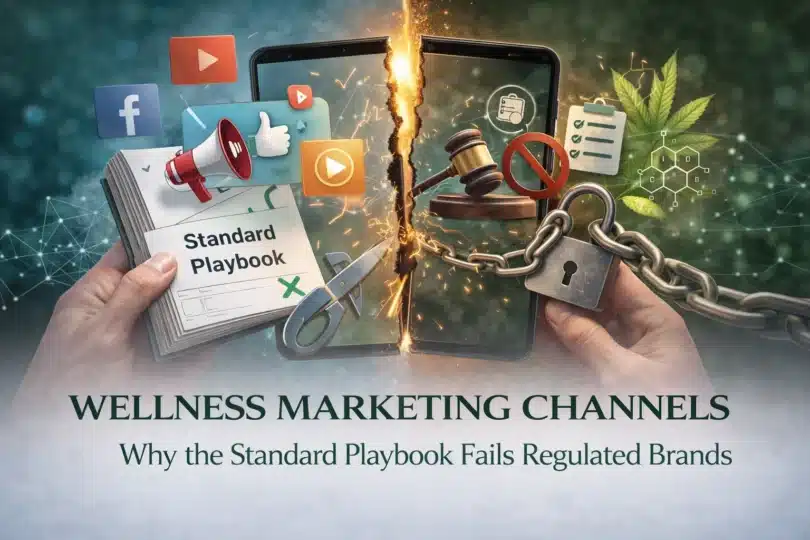
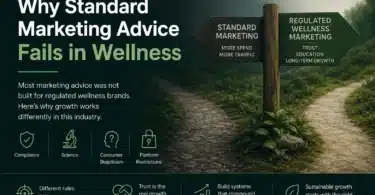
The standard digital marketing playbook: paid social, search ads, influencer campaigns, etc. was built for markets where you can say what you need to say, target who you need to target, and spend your way to scale.
Regulated wellness is not that market as regulated wellness growth always seems to hit a wall…
Facebook and Instagram restrict health claims. Google’s policy team flags supplement and CBD categories for manual review. Most ad networks simply don’t want the compliance liability that comes with your product category. The channels that unregulated brands use as their primary growth engine are, at best, unreliable for you. At worst, they’re a permanent source of account bans, wasted spend, and false starts.
This isn’t a temporary problem waiting for regulation to loosen up. It’s the operating reality of your market, and the brands that scale have accepted it and built accordingly.
Three Wellness Marketing Channels That Could Work For You
True, there are no magic wellness marketing channels that solve everything. But there are three channels that consistently outperform for regulated wellness brands, not because they’re trendy, but because they match how your buyer actually makes decisions.
Organic search
Your buyer is researching before they buy. They’re typing questions into Google, ChatGPT, Gemini, or other tools, about ingredients, about efficacy, about the difference between your category and the alternatives and about your company and product. They’re not waiting for an ad to interrupt them. They’re actively looking for answers.
A brand that shows up with specific, positive, well-structured content when that buyer is asking those questions earns a trust that a paid ad never can. The conversion from organic search in regulated wellness is almost always higher than from paid channels, because the buyer arrived with intent, not just attention.
This takes careful planning and time to build. Most brands underinvest in it because the ROI isn’t immediate. That’s exactly why doing so could create a real advantage. Your competitors who are chasing short-term paid results are leaving the organic search landscape relatively uncrowded for brands willing to build.
However, in the era of AI, the importance of Google search is dropping, as people are using different tools to get their answers. But it also makes writing good content much easier (as long as you read, verify and edit everything written AI), so organic search is still a viable option for you, as long as you do it right…
Newsletter
Newsletter is the highest-converting channel in regulated wellness, consistently, across categories. The reason is simple: the people on your list have already made a decision to trust you enough to give you their contact details. That’s a higher threshold than a social media follow or a website visit.
Done well, a wellness brand email list is not a broadcast channel. It’s a relationship. It’s where you can publish what you can’t say in ads, the nuance, the science, the opinion, the story behind the product. Everything. It’s where you build trust and the habit of regular contact that turns a one-time buyer into a repeat customer.
Most wellness brands treat their email list as an afterthought, a place to push promotions, announce sales, deliver coupons, etc. The brands that scale treat it as their primary asset and use it for communication, allowing the clients to feel a part of the brand, not just a client.
Another good alternative is to use industry recognized newsletters, like the Sunday Edition to deliver your message to a broader audience. However, as much as we love our own publication, it is not the same as having your own content. Invest in it, you will not regret it.
Community, reviews and word of mouth
In a market where the buyer is skeptical and advertising is restricted, peer recommendation carries disproportionate weight. A customer who tells two friends about your product is worth more than a hundred ad impressions.
This isn’t an accident. It’s a channel you can build deliberately, through customer experience, through your brand’s presence in the communities where your buyer already spends time, through making it easy and worthwhile for satisfied customers to share. It doesn’t scale the way paid advertising does, but it compounds in ways that paid advertising never will.
There are many ways to motivate your community to share their opinion. Explore those opportunity and find the ones that you feel comfortable with.
Wellness Marketing Channels: Common Mistakes To Avoid
Here’s something I’ve seen consistently across eight years in this market. Brands don’t fail at channels because they chose the wrong one. Wellness brands fail because they try to use the right marketing channels the wrong way.
Organic search doesn’t work if your content is vague, generic, and written to avoid saying anything specific. It works when you try to answer the questions your buyer are asking with the exact answers they need, including the fine details that most brands are too cautious to publish. You don’t have to publish a lot, but you do need to do it regularly as fresh content is important.
Email doesn’t work if every message is a promotion. It works when the reader genuinely looks forward to opening it because it consistently delivers something useful, such as insights, trends, editorials, reviews, news, opinions, etc..
Community doesn’t unless the brand has a clear identity, or even a point of view strong enough that people want to be associated with it. It doesn’t have to be a positive one (it should, especially in wellness) but make sure it is unique and attractive, for people to want to belong to.
The three wellness marketing channels above are just an example. You might find that other channels fit you better and that’s ok, as long as you invest in them, do the work and avoid short cuts.
Which Wellness Marketing Channels to Start With If You’re Starting Over
If you’ve burned budget on paid channels and are rebuilding, the sequence I’d recommend is this.
First of all, start with your own brand and verify that its story fits to the audience you are trying to reach. Then look into your products and make sure they address a real pain, of that specific audience.
Your next step should be market education, where you need to identify common questions your buyer asks most often before they buy in your category. Invest in good answers, referring to your products and publish it. This is the foundation of your content strategy, not a blog, but direct answers to real questions. Once you got this covered, continue to other aspects of your products.
Once the information is available, you might want to share it. A newsletter is a great tool, but make sure you send it on a regular basis, to build loyalty. Ask you clients to subscribe and treat them as one of your assets. Even a small list of genuinely interested subscribers is worth more than a large audience you’ve paid to reach. Treat every subscriber as someone who has extended you a specific trust that most people haven’t.
By then you will have something bigger than your brand, you have created a community. Grow it and you will see results.
In-fact, this sequence is how Cannadelics grew from zero to 17,000 newsletter subscribers without relying on paid advertising. Not because paid advertising doesn’t exist, but because in this market, owned channels are more durable, more defensible, and ultimately more valuable.
One last thing, don’t expect fast results, as this won’t happen. You are now investing in your brands future. Treat it that way. Building good wellness marketing channels require patience that most brands aren’t willing to commit to.
The ones that commit are the ones that scale.


Have anything to add? Your voice matters! Join the conversation and contribute your insights and ideas below.