


Lion’s mane mushroom is one of the most discussed naturalnremedies in the wellness space. It is commonly associated with cognitive support, focus, and long-term brain health.
At the same time, the scientific evidence behind many of these claims is still developing.
This gap between growing popularity and limited clinical validation makes lion’s mane a useful case study. It shows how biological potential, early research, and market demand interact in the modern wellness category.
This article looks at what lion’s mane is, how it works, what the research suggests, and where the limitations still exist.
What Is Lion’s Mane?
Lion’s mane, known scientifically as Hericium erinaceus, is a type of medicinal mushroom traditionally used in East Asian medicine.
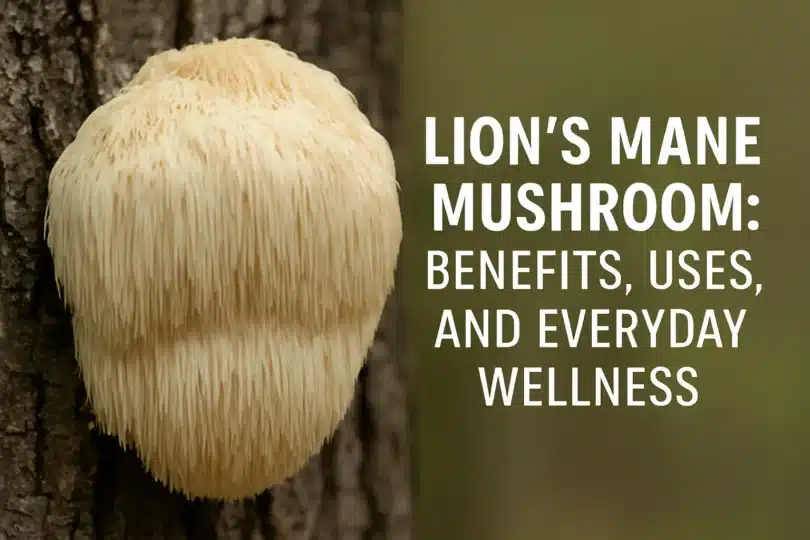
It is easily recognized by its white, cascading structure, which resembles a lion’s mane.
Historically, it has been used for digestive health and general vitality. In modern use, it is primarily positioned as a cognitive support supplement.
Active Compounds and Mechanisms
Lion’s mane contains several bioactive compounds, but two groups are particularly important:
- Hericenones
- Erinacines
These compounds are studied for their potential role in nerve growth and brain function.
Research suggests that lion’s mane may stimulate nerve growth factor (NGF), a protein involved in the growth and maintenance of neurons.
In addition, the mushroom contains polysaccharides, including beta-glucans, which are associated with immune modulation and antioxidant activity.
These mechanisms explain why lion’s mane is often positioned as a cognitive support ingredient rather than a general wellness supplement.
Cognitive Function and Memory
This is the primary reason lion’s mane has gained popularity.
Some small human studies suggest improvements in cognitive function, particularly in individuals with mild cognitive impairment.
There is also evidence from animal and laboratory studies showing:
- Protection against neuronal damage
- Support for memory-related brain regions
- Reduced accumulation of harmful proteins linked to neurodegenerative diseases
However, the key limitation remains the same.
Most of the evidence is either preclinical or based on small-scale human trials. Larger and more consistent studies are still needed.
Lion’s Mane Mushroom: Mood, Stress, and Mental Health
Lion’s mane mushroom is also being studied for its potential effects on mood.
Some early research suggests it may help reduce symptoms of anxiety and depression, possibly through anti-inflammatory effects and influence on brain signaling pathways.
Small clinical findings also point to reduced stress and improved subjective well-being in certain populations.
Still, these results are preliminary.
The current evidence does not support strong clinical claims, but it does suggest a direction for future research.
Neuroprotection and Long-Term Brain Health
One of the more interesting areas of research is neuroprotection.
Lion’s mane mushroom has been studied for its potential role in:
- Supporting neuron regeneration
- Protecting against age-related cognitive decline
- Reducing oxidative stress in brain tissue
These effects are linked to its influence on nerve growth and inflammation.
However, as with other areas, most findings come from laboratory and animal studies.
Translation into consistent human outcomes is still unclear.
Metabolic and Systemic Effects
Beyond cognitive health, lion’s mane has been studied for broader physiological effects.
Research suggests potential roles in:
- Blood sugar regulation
- Lipid metabolism
- Gut health
- Anti-inflammatory activity
These effects are less central to its market positioning but contribute to its classification as a “functional” ingredient.
Again, most findings are preliminary.
Market Position vs Scientific Reality
Lion’s mane mushroom is often marketed as a “brain booster” or natural nootropic.
This positioning is effective because:
- Cognitive performance is a high-demand outcome
- The concept is easy to understand
- Early research provides enough support to build a narrative
At the same time, the gap between marketing claims and clinical evidence remains significant.
Most benefits are supported by:
- Mechanistic reasoning
- Animal studies
- Small human trials
This does not invalidate the category, but it requires careful interpretation.
Safety and Quality Considerations
Lion’s mane is generally considered safe when used appropriately.
However, there are several considerations:
- Product quality varies between brands
- Dosage and extraction methods differ
- Clinical safety data in long-term use is still limited
Some individuals may experience mild side effects, and interactions with medications are possible.
As with other supplements, quality and sourcing matter.
Where Lion’s Mane Fits in a Wellness Strategy
Lion’s mane is best understood as a supportive intervention.
It may be relevant for:
- Individuals focused on cognitive performance
- Long-term brain health strategies
- Complementary use alongside lifestyle factors
It is not a replacement for:
- Medical treatment
- Evidence-based cognitive interventions
- Core lifestyle practices such as sleep and nutrition
Lion’s Mane Mushroom Benefits – Conclusion
Lion’s mane is not a breakthrough solution, but it is not without value.
It sits in a middle ground:
- Biologically active
- Mechanistically interesting
- Clinically developing
Understanding that position is essential.
For consumers, it helps set realistic expectations.
For brands, it highlights the importance of balancing narrative with evidence.
The opportunity is not in overstating what lion’s mane does. It is in presenting it clearly, within the limits of current research.


Have anything to add? Your voice matters! Join the conversation and contribute your insights and ideas below.