
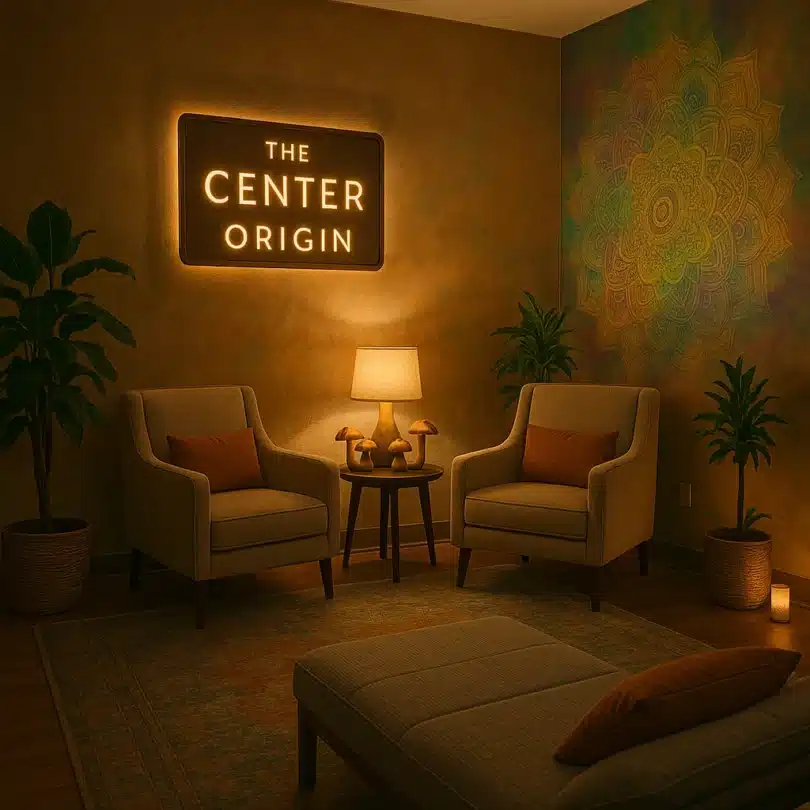


Colorado has officially opened its first licensed psilocybin healing center, marking a historic milestone in the state’s natural medicine regulatory landscape. The Center Origin, located in downtown Denver, received its state-sanctioned license in late March, making it the first designated venue where adults aged 21+ can access psilocybin-assisted therapy under legal, supervised conditions.
The center was founded by facilitator Mikki Vogt preparing for this moment since Colorado passed Proposition 122 in 2022. That ballot measure legalized regulated use of natural psychedelics, including psilocybin, DMT, and mescaline, and established a licensing framework for healing centers, cultivators, and facilitators. Although the medicinal mushrooms themselves are not yet available, The Center Origin is set to begin intake and site coordination, with patient services expected to launch once psilocybin becomes accessible through licensed producers.
Operating under a four‑phase model—screening, preparation, dosing, and integration—Colorado’s healing centers are structured to offer therapeutic depth and safety. Programs will blend psilocybin sessions with complementary services such as meditation, massage, and sound healing. Vogt emphasizes this holistic design: “It’s not just dosing—it’s about preparing the mind, guiding the journey, and helping people integrate afterward.”
The emergence of this center also underscores a growing cultural shift around psychedelics. Local artists are collaborating on ceremony spaces, weaving in mural art and live ambient music. These creative collaborations aim to turn healing spaces into multi-sensory cultural environments, reinforcing the link between plant medicine and artistic expression.
Meanwhile, facilitator training institutions like Elemental Psychedelics in Fort Collins are ramping up programs. Dori Lewis and Shannon Hughes recently opened a 150‑hour facilitator training course for the fall 2025 cohort, blending clinical best practices with spiritual and cultural stewardship. Their model underscores the need for rigorous care standards as the industry evolves.
Colorado regulators, including Denver’s Dept. of Excise & Licenses, are developing local zoning and ad policies. These include mandates that healing centers remain 1,000 feet from schools and food services, and advertising is kept discreet to avoid public hype. Advocates say this balance protects vulnerable populations while allowing safe access.
Despite enthusiasm, challenges loom: early licensure costs, delays in mushroom supply chains, and the need to expand access for lower-income patients. A waiting list reportedly exceeds 200 individuals in northern Colorado alone. Advocates suggest sliding-scale payments and subsidies are necessary to prevent elitism in natural medicine.
Source: CPR News


Have anything to add? Your voice matters! Join the conversation and contribute your insights and ideas below.