
Why Most Mushroom Brands
Look the Same.
And How to Stand Out.
Most mushroom brands rely on the same species-led language, the same vague benefits, and the same quality claims. The result is a market full of products that are difficult for buyers to understand and even harder to distinguish.
This report explores why that happens, how the market splits into different positioning paths, and how stronger functional mushroom brands create clarity without relying on claims they cannot make.
Secure payment via Stripe. Password and download link sent by email immediately after purchase.
Selected pages from the full report.
Functional mushroom brands face a different positioning problem from most wellness categories. Many buyers do not know what the species mean, the product quality debate is confusing, and platform systems often misunderstand the category entirely. The pages below are selected previews from the full report. They show the structure and approach, not the complete analysis.
Functional Mushroom Positioning Report
Preview only · Full report includes 14 pagesA market-specific framework for mushroom brands navigating ritual products, serious supplements, accessibility formats, mycelium concerns, and buyer confusion.
Sample page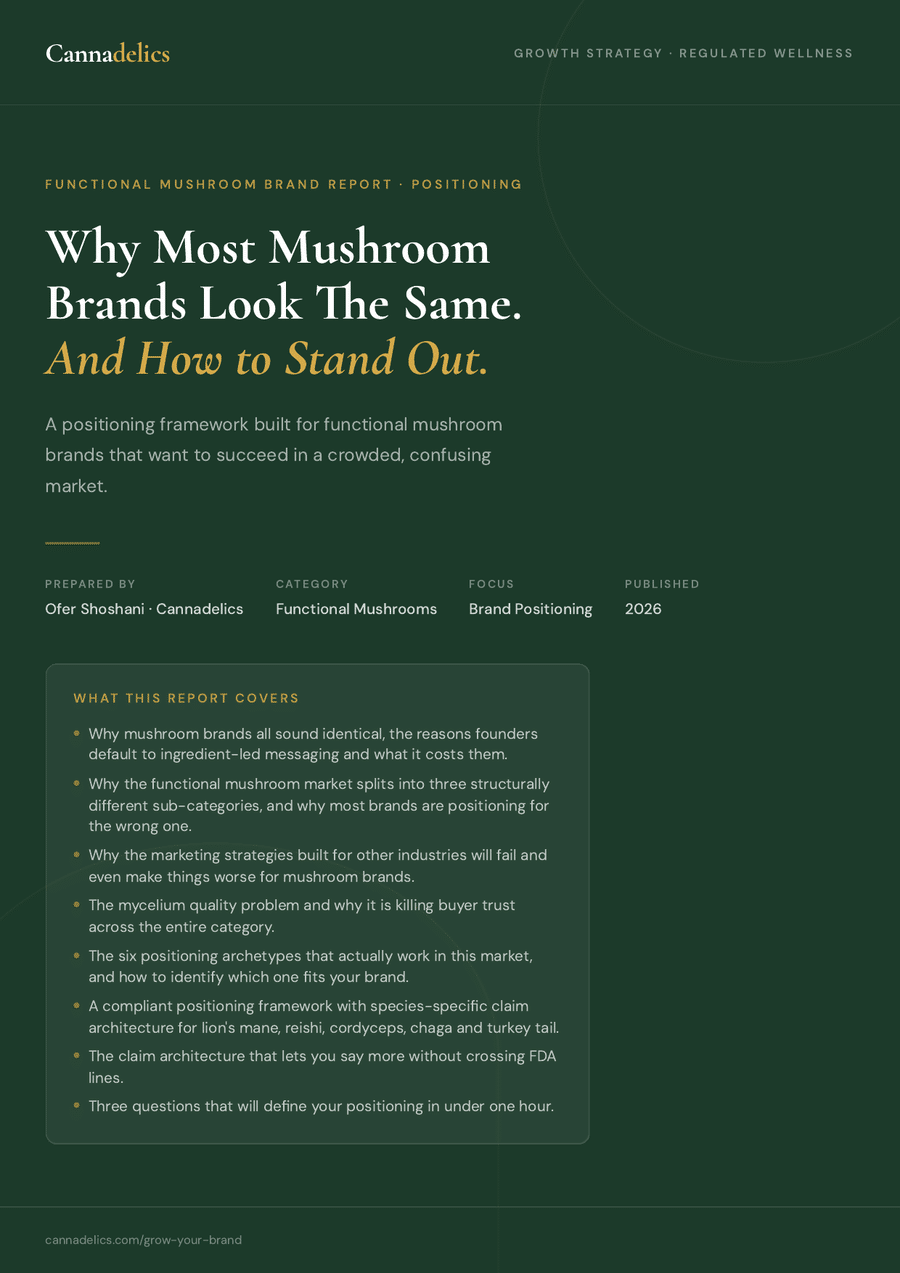
What you won’t see in the preview
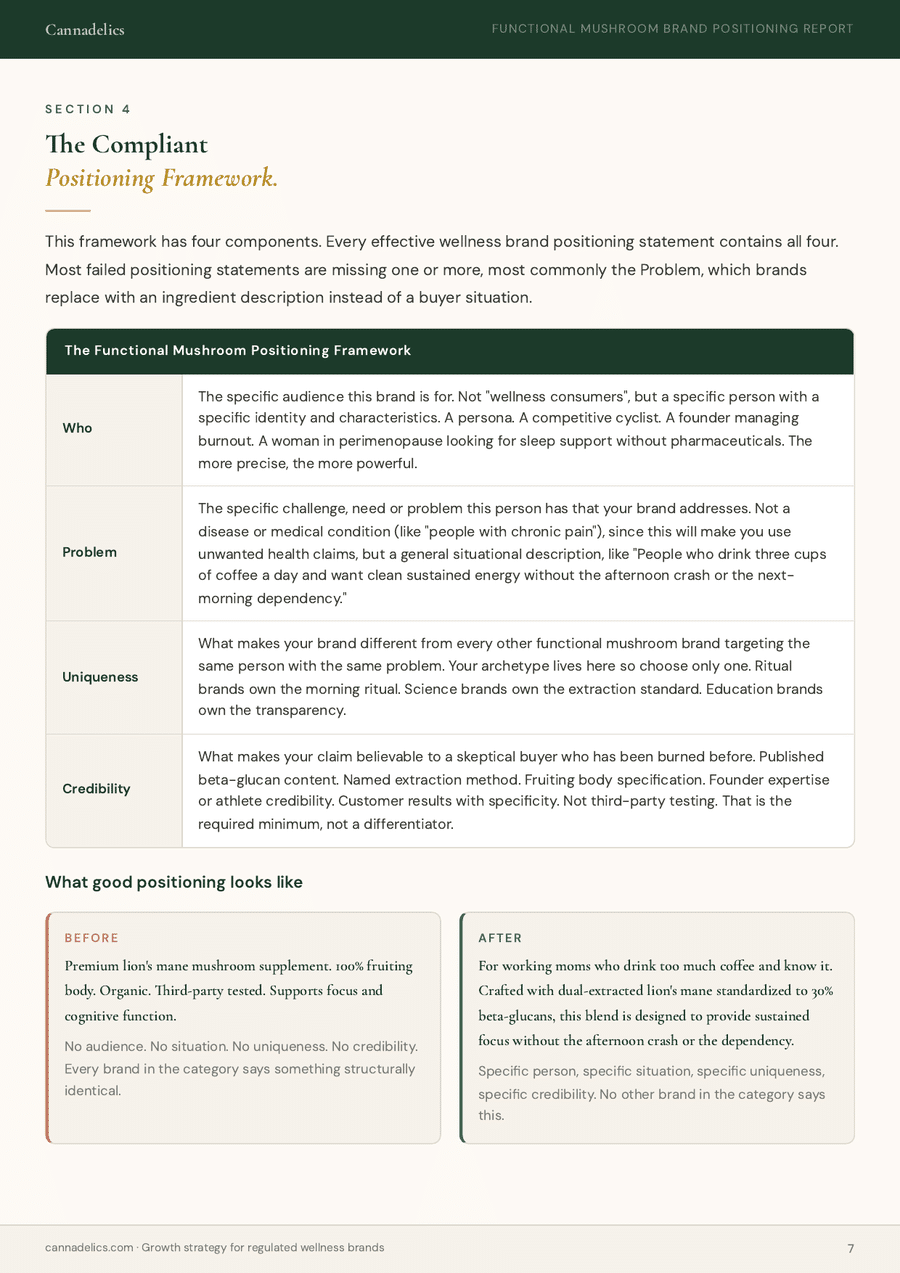
The preview pages show examples of the report structure and frameworks. The full report also includes the six positioning archetypes, species-specific claim architecture, messaging considerations, practical positioning questions, implementation guidance, and additional context designed specifically for functional mushroom brands.
They may realize their brand sounds almost identical to dozens of other lion’s mane or reishi products.
They may discover that customers care less about species names than the problem they are trying to solve.
They may see that their differentiation exists, but is hidden behind generic mushroom category language.
They may identify a positioning path most mushroom brands are largely ignoring.
Like what you see?
These preview pages are only a small sample of the full Functional Mushroom Positioning Intelligence Report. The complete report includes the positioning frameworks, archetypes, claim architecture, implementation questions, and category-specific guidance used throughout the analysis.
Get the Report$197 · credited toward Branding Review within 30 days · updates included for 12 months
A positioning framework for mushroom brands
that need buyers to understand them.
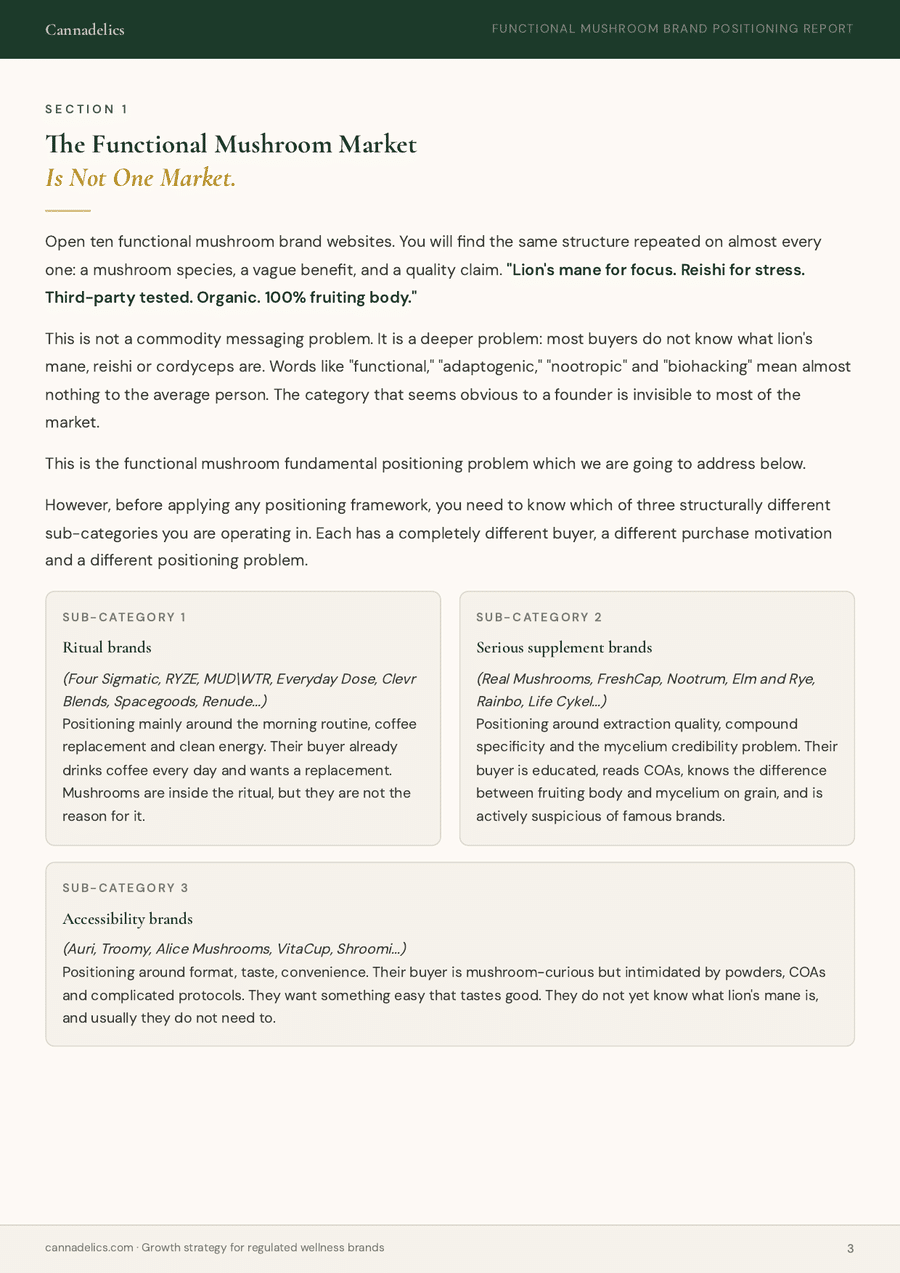
The functional mushroom market has matured quickly, but buyer understanding has not kept pace. Most brands still lead with species names, vague outcomes, and quality language that means little to a first-time buyer. This report explains where the market actually splits, why different sub-categories require different positioning, and how brands can communicate value more clearly within the limits of compliant wellness marketing.
The problem is not the mushroom.
It is how the category is being translated.
- Their brand is selling lion’s mane, reishi, or cordyceps while buyers are still trying to understand the benefit.
- Their positioning belongs to the wrong sub-category: ritual, serious supplement, or accessibility.
- Their quality claims are real but too technical to create motivation for the average buyer.
- Their messaging speaks to educated insiders while the broader market needs translation.
Built for mushroom brand founders
who want a clearer view of their market.
Functional mushroom brands cannot rely on ingredient-led positioning forever.
Most generic wellness marketing advice does not address the specific challenges of the mushroom category. Buyers are confused by species names, skeptical of quality claims, unfamiliar with extraction standards, and often unsure whether functional mushrooms are supplements, coffee alternatives, lifestyle products, or something closer to psychedelics.
This report focuses specifically on the realities of positioning a functional mushroom brand in that environment: translating the category for buyers, choosing a clear archetype, navigating the mycelium quality debate, and building messaging that is specific enough to matter without crossing into claims that create regulatory or platform risk.
We’ve spent years watching mushroom brands make the same positioning mistakes.
$2.5M generated for our partners.
Through Cannadelics, we have watched functional mushrooms move from niche supplement shelves into coffee alternatives, gummies, powders, capsules, beverages, and mainstream wellness conversations. The same pattern keeps appearing: brands lead with species and quality language while buyers need context, clarity, trust, and a reason to choose one brand over another. This report was built from that perspective.
See your market
more clearly.
One clear framework. Built specifically for the functional mushroom market.
Get the Report$197 · Immediate access · credited toward Branding Review within 30 days · updates for 12 months