
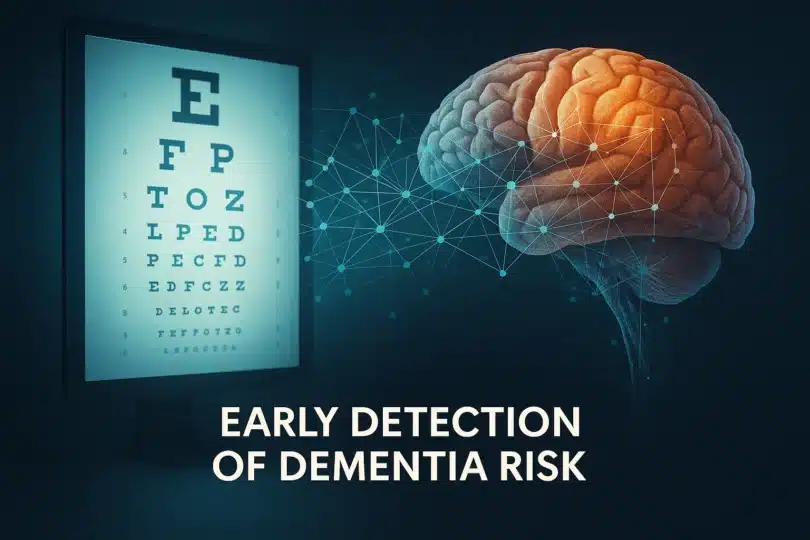

A new study is turning heads in cognitive health—it suggests that a simple visual sensitivity test might detect dementia risk up to 12 years before symptoms surface.
The research, conducted in Norfolk, England, tracked 8,623 healthy adults over many years. It measured how long participants took to recognize a triangle among moving dots—a test of visual processing speed. By the study’s end, 537 individuals had developed dementia, and those destined to receive a future diagnosis were significantly slower in detecting the target shape.
Why does sight reveal what memory forgets? Researchers point to neuropathological clues—early deposits of amyloid plaques and neurofibrillary tangles often appear in brain regions vital for vision. These areas may decline before memory networks, making visual tests a sensitive early warning signal.
Beyond letter charts and acuity tests, the study highlights specific visual deficits linked to dementia: reduced color contrast sensitivity, slower eye-movement control, and difficulty ignoring distractions. These subtle changes could act as early indicators, even when everyday tasks seem unaffected.
Experts caution that more research is needed before visual testing becomes standard dementia screening. But if added to memory and cognitive batteries, these tests could boost early detection—opening doors for lifestyle interventions, risk reduction, and targeted therapy well before irreversible decline sets in.
For clinicians, the takeaway is clear: the eyes aren’t just mirrors—they might be early warning studs in the brain. Integrating these tests into routine eye exams—or even digital health platforms—could revolutionize preventive neurology.
From a patient viewpoint, this discovery offers hope. Early awareness empowers individuals to prioritize brain health through education, cardiovascular care, diet, enriched environments, and exercise—potentially slowing disease progression before it takes hold.
Source: ScienceAlert, The study

Have anything to add? Your voice matters! Join the conversation and contribute your insights and ideas below.